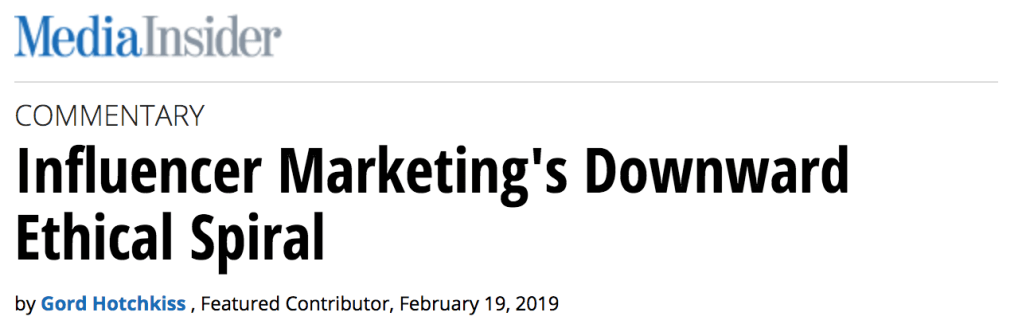
In this article, Media Insider discusses the current state of advertising by describing advertisers as “sneaky”. Due to the increasing rejection of ads, advertisers have gotten very creative by using native ads and influencer marketing to sell a product without outright selling a product. This creates an ethical dilemma. How “sneaky” should advertisers be allowed to be? Is it ethical to sell a product to an audience that doesn’t know they are being targeted? Throughout this semester, I am going to be digging into these questions and see if we can come to an understanding of native advertisements and influencer marketing.
In the Media Insider article, two year-old identical twins, Taytum and Oakley Fisher who have 2.4 million followers on Instagram are up for debate. These twins are paid up to five figures for a single branded photo. Of course the brains behind the two year-old’s Instagram is in fact not them but, their parents. Is it ethical for these parents to use their children to gain a buck? Well no matter what you think, this is becoming more and more common. Kids, adorable kids, are a huge market for influencer marketing and are making anywhere from $5 billion to $10 billion.
If you are still wondering what the problem is in this scenario, let me explain. Influencer marking causes an issue of transparency for the fact that there is none. Traditional advertising is very black and white! There is a fundamental exchange for consumer attention and in return there are dollars. There have been defined rules and measurements of effectiveness for years. The whole point of influencer marketing is to present advertisements as something other than advertisings. Influencers are meant to appear as genuine fans and users of the products they are selling and they push these products on their social media feeds.
But, there is definitely an upside to the current state of advertisement. Native advertising has proved to be incredibly successful and this new wave of influencer marketing is way more interesting and exciting then regular TV commercials. It perfectly matches the younger generation and how they communicate.
The ethical solution to the current state of advertisement is to counteract the perceived notion of influencer marketing being “sneaky” and ensuring transparency on all sponsored advertisements. I think disclosure of partnerships and sponsorships can seem like a negative thing. But, the way influencers captivate their audience by allowing them to see inside their everyday life can cause the disclosure to be very positive. They trust influencers and take their recommendations to heart, so to put the name of a influencer and a brand together, loudly and proud, can be very impactful for the brand.
Connection to Media Ethics: Issues and Cases Ninth Edition by Philip Patterson, Lee Wilkins, Chad Painter: I think it is interesting to look back at chapter 1, “An Introduction to Ethical Decision-Making” and compare/contrast how ethics were used by philosophers and how ethics are seen by influencers today.
 Media, Ethics and Society Blog